Category: Insights
-
Effortless Confidence: Embracing Your Natural Self for Self-Assurance
Understand confidence down to the constructional level and make a hack by rewiring your brain to shift how you look at things for novel approaches. Make yourself carefree and indifferent so you can focus on getting important things done; don’t care too much about others’ opinions.
-
Social Conditioning (Part 1: Understanding the subject)
The content discusses the impact of social conditioning on individuals and society. It highlights the pressure to conform and the potential negative effects on individual well-being. It emphasizes the need for a balance between conformity and individual growth, and the importance of flexible social conditioning to allow for natural development and contribution of diverse values…
-
Intelligence, Knowledge and Wisdom
The concepts of “intelligence, “knowledge” and “wisdom” have been circulating in the heart of humanity since the dawn of our civilizations. Even though we seem to have an intuitive understanding of these concepts, the matter of their importance rather remains outside of the general public’s awareness. Definition We are not going to approach this mechanically…
-
Human Learning is not Wired for Truth
Human learning is not solely driven by an objective quest for truth. Instead, it’s shaped by evolutionary pressures, cognitive biases, and personal motivations, favoring information advantageous to survival or personal desires. The concepts of right and wrong are context-specific, serving to establish social order. A quest for pure knowledge and truth is a luxury emerging…
-
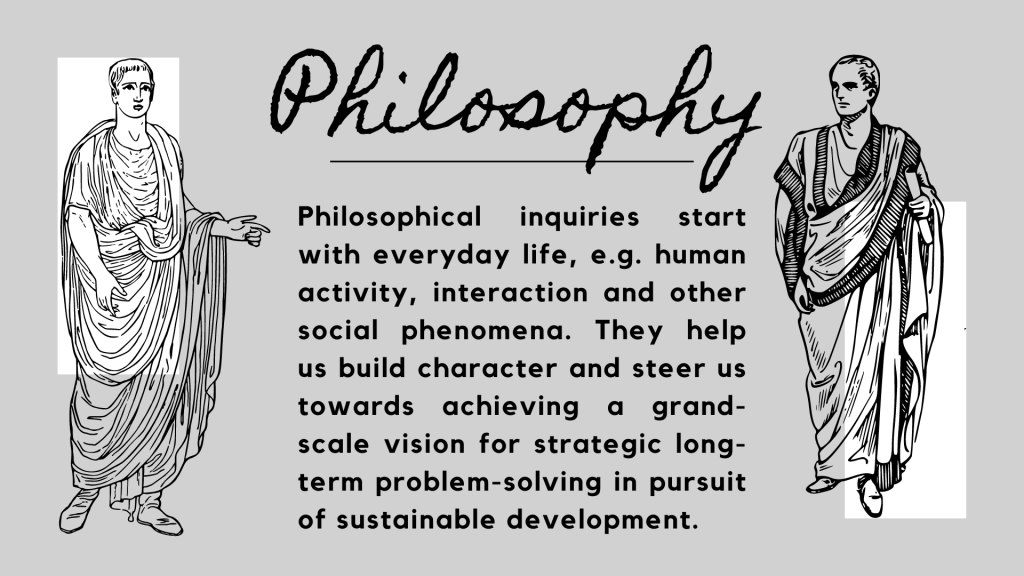
What is Philosophy? Is it unrealistic and useless?
Philosophy is often misunderstood and seen as impractical, but it is rooted in everyday life. Philosophical thinking helps in making decisions and understanding the nature of things, leading to knowledge and wisdom. Engaging in philosophy involves seeking the big picture and applying knowledge to solve long-term problems. It is a tool for both character development…
-

The Truth about Fate
The debate over fate versus free will has persisted for ages. Some believe we shape our destiny, while others argue that external forces predetermine our path. In reality, both coexist, each influencing our lives to varying degrees. Our innate traits and external circumstances set limitations, but we still have choices to shape our future.
-

The Jigsaw Puzzle
Life is a complex interconnected system, where each individual is a piece of the puzzle. Enlightenment leads to understanding the oneness of existence. Rather than dividing and analyzing, we should strive to see the big picture and embrace diverse perspectives. With vision and empathy, we can transcend our limitations and find inner peace.
-

The Principle for a Better Learning Curve
Learning is crucial for survival, as it helps us stay informed and manage our lives. The methods and focus of our learning determine the depth and breadth of our knowledge. To maximize learning potential, we must expand our attention coverage, make connections between different elements, and view the world from various angles to gain deeper…
-
“Consciousness Precedes Matter”
The question of whether matter arose before consciousness or vice versa is a complex and has long been debated to no avail that it has no definitive answer. However, this piece of writing is not to answer whether matter or consciousness came first, but instead focuses on how consciousness can determine matter. To start, the…
-
How Knowledge May Weigh You Down
“Knowledge is power”, “knowledge is treasure”, “knowledge can change lives”, etc. There are many views on knowledge, but most are positive. Is knowledge always good? The answer is… it depends. The line lies between knowing enough and knowing as much as possible. If you aim at obtaining sufficient knowledge to do a certain thing in…
 The Way of Balance