Category: English Articles
-
the rooftop
the city below never slept. it pulsed like a living organism—neon veins, asphalt lungs, the occasional shriek or honk like a nervous twitch. but up here, on the edge of a quiet rooftop, time slowed. the air was cooler. cleaner. honest. Aeron sat on the ledge, legs dangling into the dusk. his fingers twisted the hem…
-
All about Buddhism – Part 1: The Origin Story and Some Notes on Buddhism
The Story of Buddha – Simplified Born in the 5th century BC, Siddhartha Gautama was the legendary figure who later became Buddha (meaning ‘the enlightened’) that people still revere today. Though he was a royal prince who grew up in riches, he soon left his mortal life covered in wealth and ease after he had…
-
Effortless Confidence: Embracing Your Natural Self for Self-Assurance
Understand confidence down to the constructional level and make a hack by rewiring your brain to shift how you look at things for novel approaches. Make yourself carefree and indifferent so you can focus on getting important things done; don’t care too much about others’ opinions.
-
Social Conditioning (Part 1: Understanding the subject)
The content discusses the impact of social conditioning on individuals and society. It highlights the pressure to conform and the potential negative effects on individual well-being. It emphasizes the need for a balance between conformity and individual growth, and the importance of flexible social conditioning to allow for natural development and contribution of diverse values…
-
Intelligence, Knowledge and Wisdom
The concepts of “intelligence, “knowledge” and “wisdom” have been circulating in the heart of humanity since the dawn of our civilizations. Even though we seem to have an intuitive understanding of these concepts, the matter of their importance rather remains outside of the general public’s awareness. Definition We are not going to approach this mechanically…
-
Human Learning is not Wired for Truth
Human learning is not solely driven by an objective quest for truth. Instead, it’s shaped by evolutionary pressures, cognitive biases, and personal motivations, favoring information advantageous to survival or personal desires. The concepts of right and wrong are context-specific, serving to establish social order. A quest for pure knowledge and truth is a luxury emerging…
-

Being conventional, is it good or bad?
Conventionality is a common trait in human society, with conventional and unconventional individuals. While conventionality provides stability and safety, it can hinder creativity and lead to alienation of those who think differently. Understanding and evaluating unconventional ideas before making assumptions is crucial to avoid societal division and misconceptions, promoting mutual acceptance and innovation.
-
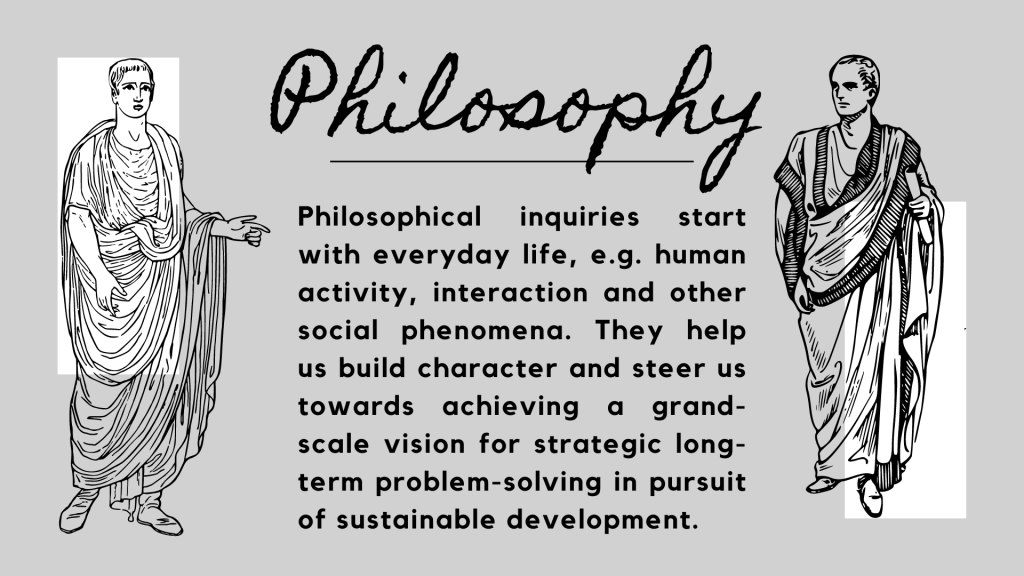
What is Philosophy? Is it unrealistic and useless?
Philosophy is often misunderstood and seen as impractical, but it is rooted in everyday life. Philosophical thinking helps in making decisions and understanding the nature of things, leading to knowledge and wisdom. Engaging in philosophy involves seeking the big picture and applying knowledge to solve long-term problems. It is a tool for both character development…
-

The Truth about Fate
The debate over fate versus free will has persisted for ages. Some believe we shape our destiny, while others argue that external forces predetermine our path. In reality, both coexist, each influencing our lives to varying degrees. Our innate traits and external circumstances set limitations, but we still have choices to shape our future.
-

The Jigsaw Puzzle
Life is a complex interconnected system, where each individual is a piece of the puzzle. Enlightenment leads to understanding the oneness of existence. Rather than dividing and analyzing, we should strive to see the big picture and embrace diverse perspectives. With vision and empathy, we can transcend our limitations and find inner peace.
 The Way of Balance